From donated organ to
decision-ready data
Revalia’s system was built to test medicines in human organs. Here is what happens in a study.
01
An organ is offered
for research
Organ procurement organizations (OPOs) coordinate every donated organ in the U.S. When an organ recovered for transplant can’t be placed and research use has been authorized by the donor or their family, the OPO can offer it to Revalia.
02
We prepare it for
perfusion.
Organs arrive at our New Haven Organ ICU at any hour. Our team prepares each one and connects it to Orpheus, our perfusion system.
03
The organ functions again.
Orpheus supplies oxygen, a blood-based perfusate and nutrients while controlling temperature, pressure and flow. Sensors and point-of-care tests keep the organ within the range it would have in the body.
04
We dose the drug.
After a predose biopsy and baseline, we deliver the drug by the agreed route, with dose and delivery set from your preclinical work, including doses above clinical exposure for safety margin studies. Each organ serves as its own predose control, paired kidneys from the same donor can serve as matched controls, and Revalia’s catalogue of control human organ data provides additional comparison.
05
We sample over days.
We sample extensively over days. Perfusate, urine, or bile samples, alongside extensive mapped biopsy sampling, are collected on a scheduled basis over 72 hours or more.
06
You get the data.
Results can include distribution maps, toxicity markers, histopathology, genomics and analysis tied to the question your team needs to answer.
Human biology at the
level of the whole organ
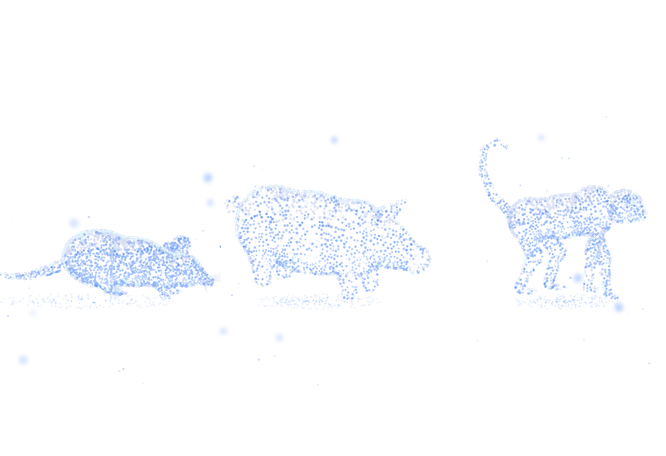
Animal models
Accepted by regulators, but species differences limit how well results translate to people
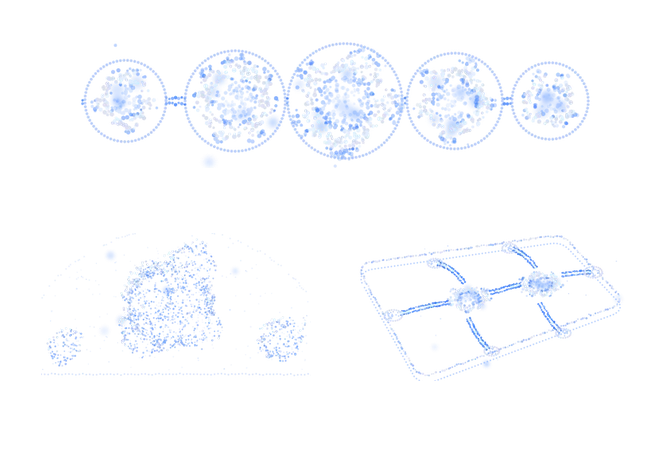
Microphysiological systems (MPS)
Such as organ-chips and organoids – human cells at high throughput, without whole-organ structure or blood flow
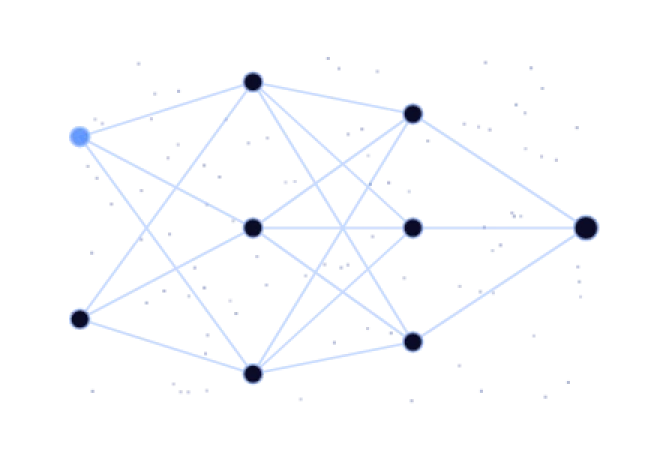
AI models trained on non-human data
Fast and scalable, with little human ground truth to learn from
Data from these human systems is highly complementary to whole-organ data. Together, they give drug developers, and the AI models they build, a more comprehensive picture of human biology.
Revalia’s Ex Vivo Organ Platform
Whole, functioning human organs measured over days, producing human data for program decisions, discovery datasets and AI models
A system built
for medicine testing
Transplant perfusion systems were designed to assess organs for transplant. Orpheus and its software were designed for drug testing, from the perfusate and organ housing to control of temperature, pressure and flow, so teams can track and measure a drug in ways that are difficult or impossible inside the body.
Human answers for the questions
that decide your program
Revalia offers defined studies in human kidneys and livers, the two organs where toxicity most often stops drug programs, and designs custom studies when a program needs one. Each study is built around a specific decision, such as advance, redose, reformulate or stop, or around a mechanism question, such as why a drug isn’t working or why an adverse event appeared in the clinic.
Kidney studies
- Drug and gene therapy distribution, including delivery to target cell types
- Kidney toxicity and the exposure at which injury emerges
- Target effect and organ function, including urine output and filtration markers
Liver studies
- Drug distribution and metabolism
- DILI (Drug-induced liver injury signals) and mechanism
- Target effect and organ function, including bile output
What you receive
Data and analysis designed to inform your next decision and support regulatory discussions. Revalia delivers data and insight; tissue samples stay with Revalia.
Beyond kidney and liver
Revalia has also perfused lungs, hearts, pancreas and placenta, and can source tumor-bearing and disease-state organs, such as polycystic kidneys. Talk to us about programs that need these models.
Human data to power
the future of medicine
Large language models learned from the internet, and AlphaFold learned from decades of protein structures. Models that predict how a drug behaves in humans still learn mostly from animal studies and isolated cell systems, with little ground-truth human data to learn from.
Every organ Revalia perfuses generates days of longitudinal data, all linked to the same donor: medical history, organ physiology, perfusate, urine and bile chemistry, histopathology, spatial mapping and multi-omics. Most human datasets available today cover only one or a few of these. Revalia is building a repository of human data designed to be unmatched in breadth and depth, to train a new class of AI models of human biology.
01
Discovery Datasets
Licensed access to human organ data for target discovery, mechanism of action and clinical trial design.
02
AI Models
AI models of human biology trained on Revalia’s organ data, starting with ADME/tox and dosing prediction, so teams can screen candidates against human biology earlier. Revalia works with partners on model training.
03
Perfusion Study Offerings
Study Packages use human biology models to understand where a drug goes in the body, whether it has an effect, and its potential toxicity, with tailored approaches for liver and kidney studies.